Fit for Everything: Trackers, Watches, Rings, and Earbuds
Podcast: Download
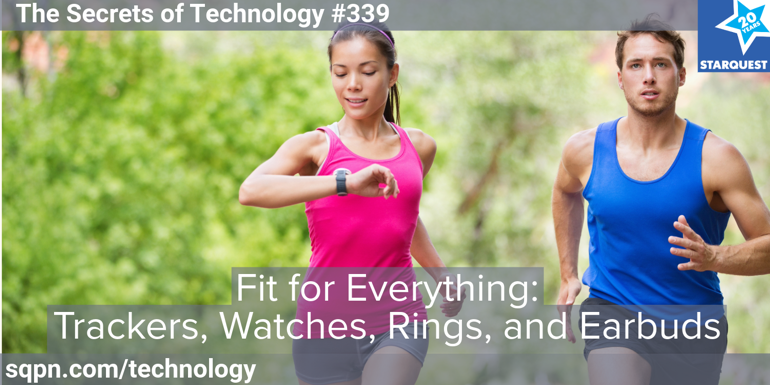
TEC339: Your wrist, your finger, or your ear — fitness technology has claimed every corner of the body, and the options have never been more varied or more affordable.
Dom Bettinelli, Tom Grelinger, and Fr. Joseph Sund open by marveling at Artemis II, humanity’s first crewed return to lunar orbit in fifty years, before turning to the week’s main subject: a full survey of the fitness wearables market.
The panel traces the category from its roots — the Fitbit clip-on, step-counting pedometers — through a surprising history lesson: the 10,000-step goal that has driven fitness culture for decades originated as a 1960s Japanese marketing campaign for the Manpo-Kei pedometer, timed to the 1964 Tokyo Olympics. It’s a useful goal, but hardly medical gospel.
From there, the panel walks through four major form factors:
Fitness trackers start as low as $30 and top out around $200. Brands like Fitbit (now Google), Samsung Galaxy Fit 3, Xiaomi Mi SmartBand 10, and Vivo Fit Jr. cover the basics — steps, heart rate, sleep, notifications — with multi-day to multi-month battery life. A growing number now include heart rate monitoring and kids’ GPS location features.
Smartwatches add apps, GPS, cellular connectivity, crash detection, ECG, and third-party platform integrations. Apple Watch dominates the mainstream market across three tiers (SE, Series 11, Ultra 3; $250–$800). Garmin leads for serious athletes — marathon runners, triathletes — with sport-specific metrics, shock resistance, and weeks of battery life ($180 to over $3,000). Google Pixel Watch and Samsung Galaxy Watch serve the Android ecosystem and, notably, can also pair with iPhones — something Apple Watch cannot do in reverse.
Fitness rings — the Oura Ring 4, Samsung Galaxy Ring, and the budget-friendly Amazfit Helio Smart Ring — trade the display for comfort and multi-day battery life. All data is viewed on a paired phone. Ideal for those who find wrist devices intrusive.
Fitness earbuds are the newest category: Apple AirPods Pro 3, Sennheiser Momentum Sport, and Beats PowerBeats Pro 2 track heart rate during workouts, combining audio gear and fitness sensing in one device.
The conversation closes on the two measurements still missing from consumer wearables: non-invasive glucose monitoring and blood pressure. Whoever cracks glucose first, the panel agrees, stands to reshape both healthcare and the food industry.
 Apple Podcasts
 YouTube
 Spotify
 Amazon Music
 TuneIn
 RSS
RSSGet all new episodes automatically and for free:
Follow by Email | Listen to this episode and subscribe on YouTube.
Help us continue to offer Secrets of Technology. Won’t you make a pledge at SQPN.com/give today?
Links for this episode:
- NASA
- Artemis II Mission Tracker
- Apple Fitness+ (Time to Walk)
- Nikon D5
- Fitbit
- Apple Watch SE
- Apple Watch Series 11
- Apple Watch Ultra 3
- Garmin
- Samsung Galaxy Fit 3
- Xiaomi Mi Smart Band 10
- Garmin vivofit jr. 3
- Garmin vivosmart 5
- Strava
- Pebble
- Google Pixel Watch
- Samsung Galaxy Watch
- Amazfit Bip 6
- Amazfit T-Rex Ultra 2
- OnePlus Watch
- Nothing Watch
- Oura Ring 4
- Samsung Galaxy Ring
- Amazfit Helio Smart Ring
- Apple AirPods Pro 3
- Sennheiser Momentum Sport
- Beats PowerBeats Pro 2
- Leave us a review on Apple Podcasts!
- Join the conversation at the StarQuest Facebook page.
- Be part of the StarQuest Discord community at SQPN.com/discord
- Email us feedback or comments to [email protected]
Picks of the Week:
- Tom: CamelCamelCamel
- Fr. Joseph: Music Assistant
- Dom: SpamSieve
Want to Sponsor A Show?
Support StarQuest’s mission to explore the intersection of faith and pop culture by becoming a named sponsor of the show of your choice on the StarQuest network. Click to get started or find out more.
Disclaimer: Hosts, panelists, and guests may have a financial interest in the companies discussed through investments or other means. Their opinions and recommendations are not affected and do not present a conflict of interest. We offer this statement in the interest of full disclosure.