What Are Demons?
Podcast: Download
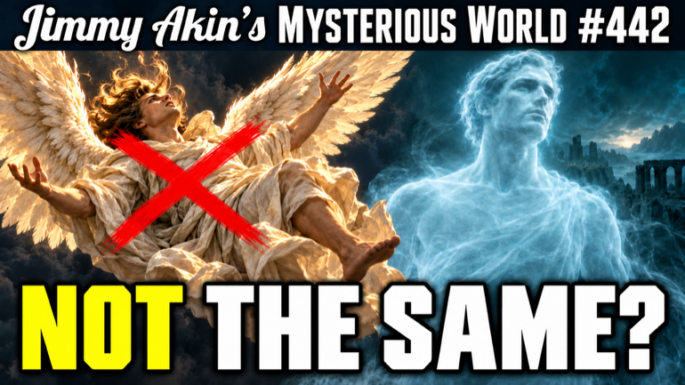
MYS442: What is a demon?** Most of us would answer without thinking: a fallen angel, a rebel spirit that turned against God. That is what the Catechism of the Catholic Church means by the word today. But “demon” comes from the Greek daimon, and Greek speakers were using it long before anyone spoke of fallen angels. So what did it mean first, and do the Gospels ever use it the way we do?
Jimmy Akin and Dom Bettinelli start with a surprise hiding in the New Testament. Mark and Luke call the same possessing beings demons, unclean spirits and evil spirits, so those words form one cluster. The fallen angels of Matthew 25, 2 Peter, Jude and Revelation form another. Do the two ever meet?
To find out, Jimmy goes back to the beginning. In Homer, a daimon can be a god. In Plato, it is a spirit between the divine and the mortal. Hesiod makes the dead of the golden race into guardian daimones, and Apuleius sorts the human dead into lemures, household Lares and larvae, words Linnaeus later borrowed for lemurs and insect larvae.
Then come the Septuagint, where demons are mostly foreign gods; the midday demon of the Psalms and the goat-demons of Isaiah; Asmodeus in Tobit; and 1 Enoch and Jubilees, where the spirits of the Nephilim giants become evil spirits on the earth. Philo treats demons and angels as one kind of being, Josephus speaks of the souls of the wicked entering the living, and later rabbinic Judaism has demons created on the eve of the first Sabbath.
Among the Church Fathers, Justin Martyr and Athenagoras speak of hybrid ghosts, and one second-century writer becomes the first on record to call demons fallen angels. Origen, Lactantius and St. Augustine carry the story to the point where that meaning became standard in the West.
With that history in hand, Jimmy reads the New Testament with fresh eyes: the Athenians’ “foreign divinities,” Paul on food offered to idols, the Gerasene demoniac among the tombs, and Beelzebul, the prince of demons. Can the dead possess the living? Jimmy looks at Rule 14 of the 1614 Rite of Exorcism, Fr. Gabriele Amorth, Begone Satan and the Earling exorcism, and the Anneliese Michel case.
Does any of this change Catholic teaching on demons? Jimmy explains why it does not, and why words like saint, hell and angel have shifted too. The episode closes with your feedback on episode 431, Are Auras Real?
Get all new episodes automatically and for free:
 Apple Podcasts
 YouTube
 Spotify
 Amazon Music
 TuneIn
 RSS
Follow by Email | Watch this episode and subscribe on YouTube
Help us continue to offer Jimmy Akin’s Mysterious World. Won’t you make a pledge at SQPN.com/give today?
Links for this episode:
- The Catechism of the Catholic Church, Paragraph 414
- Plato, Symposium (Perseus Digital Library)
- Hesiod, Works and Days (Project Gutenberg)
- Porphyry, On Abstinence from Animal Food, Book II
- The Book of Enoch (R. H. Charles translation)
- Justin Martyr, The First Apology (New Advent)
- Justin Martyr, The Second Apology (New Advent)
- Tatian, Address to the Greeks (New Advent)
- Athenagoras, A Plea for the Christians (New Advent)
- Theophilus of Antioch, To Autolycus, Book II (New Advent)
- Origen, De Principiis, Preface (New Advent)
- Lactantius, Divine Institutes, Book II (CCEL)
- Augustine, The City of God, Book V (New Advent)
- Fr. Gabriele Amorth, Possessioni Inquietanti – Anime Dannate e Vaganti (YouTube, in Italian)
- Please spread the word about the podcast. Leave us a review on Apple Podcasts!
- Purchase the books and other material from this and other episodes at the Mysterious World Bookstore.
- Join the conversation at the Starquest Facebook page and the Jimmy Akin’s Mysterious World Facebook page.
- Be part of the StarQuest Discord community at SQPN.com/discord
- Send your feedback or comments to [email protected] or send a tweet to @mys_world
- You can also leave a voice message on the Mysterious Feedback Line at (619) 738-4515
Chapters:
- 0:00:00 – Intro
- 0:01:17 – What is a demon?
- 0:02:36 – Demons in world religions
- 0:08:44 – The Catholic definition: fallen angels
- 0:10:41 – Demon, unclean spirit, evil spirit: one cluster
- 0:17:20 – The fallen angel cluster
- 0:23:04 – Reading without anachronism
- 0:24:57 – Daimon as a god: Homer
- 0:26:46 – Daimon as an intermediate being: Plato
- 0:27:52 – Porphyry’s sacrifice-craving daimones
- 0:31:24 – Ghosts of the golden race: Hesiod
- 0:33:57 – Good men become daimones: Plato
- 0:35:34 – Ordinary ghosts: Apuleius
- 0:37:48 – Lemurs and larvae
- 0:39:08 – Thank you to Patrons
- 0:39:39 – Sponsor: Fr. Dwight Longenecker
- 0:40:30 – Sponsor: Grave Tending Solutions
- 0:42:19 – Demons in the Septuagint
- 0:44:33 – The midday demon
- 0:47:07 – Goat demons in Isaiah
- 0:49:24 – Asmodeus in Tobit
- 0:52:44 – 1 Enoch: the spirits of the giants
- 0:56:30 – Jubilees and Mastema
- 1:00:16 – Philo: demons are angels
- 1:02:13 – Josephus: good and wicked ghosts
- 1:05:11 – Demons in later Judaism
- 1:08:40 – Church Fathers: Justin and Athenagoras
- 1:13:02 – Justin Martyr and human ghosts
- 1:14:50 – Tatian: the first fallen-angel demons
- 1:17:35 – Theophilus of Antioch
- 1:18:50 – Origen: still an open question
- 1:20:45 – Lactantius: two kinds of demons
- 1:23:07 – Augustine settles it in the West
- 1:24:31 – The New Testament: demons as pagan gods
- 1:27:44 – The demons Jesus cast out
- 1:29:23 – The Gerasene demoniac
- 1:32:15 – Beelzebul, the prince of demons
- 1:35:22 – Can the dead possess the living?
- 1:36:19 – Rule 14 and Fr. Gabriele Amorth
- 1:40:48 – The Earling exorcism and Begone Satan
- 1:42:37 – Anneliese Michel
- 1:46:21 – Faith Perspective
- 1:48:42 – Bottom Line
- 1:49:49 – Further Resources
- 1:50:35 – Mysterious Feedback: #431 Are Auras Real?
- 1:56:48 – Your mysterious feedback
- 1:57:22 – Thank you to Oasis Studio 7
- 1:57:34 – Jimmy’s YouTube channel
- 1:58:38 – Next Time: Pope Benedict on Adam, original sin and aliens
- 1:58:58 – Share the show / write a review
- 1:59:07 – Get your Mysterious merch
- 1:59:15 – Show notes
- 1:59:22 – Become a Patron
- 1:59:31 – Sponsor: Rosary Army and School of Mary
- 1:59:53 – Sponsor: The Grady Group
- 2:00:50 – Outro
This Episode is Brought to You By:
The Grady Group, a Catholic company bringing financial clarity to their clients across the United States. Using safe money options to produce reasonable rates of return for their clients. Learn more by visiting GradyGroup.us.
Rosary Army. Featuring award-winning Catholic podcasts, Rosary resources, videos, and the School of Mary online community, prayer, and learning platform. Learn how to make them, pray them, and give them away while growing in your faith at RosaryArmy.com and SchoolOfMary.com
Father Dwight Longenecker. Fr. Dwight Longenecker reminds the Jimmy Akin’s Mysterious World audience that one of the most mysterious of mysteries is coming up, and that is the mystery of Christ’s nativity, otherwise known as Christmas. The Magi, along with the shepherds, are the mysterious strangers who come to visit the stable boy of Bethlehem. In his two Christmas books, Father Longenecker explores the Mystery of the Magi and the Secret of the Bethlehem Shepherds. These books will deepen your understanding of Christmas and are perfect to wrap up and put beneath the tree. To cut through all the mystery and get down to the history, check out Fr. Longenecker’s Substack and website
< href=”http://gravetendingsolutions.com/”>Grave Tending Solutions. Grave tending is a professional service and apostolate that brings peace of mind to families by caring for established gravesites. Distance and physical limitations can create barriers to maintaining a loved one’s final resting place. From planting graveside gardens to cleaning headstones, a grave tending professional provides a way for their clients to continue to care for and honor their loved ones. If you’re interested in learning more about grave tending, either as a client or as someone who’d like to enter the profession, please visit GraveTendingSolutions.com
Want to Sponsor A Show?
Support StarQuest’s mission to explore the intersection of faith and pop culture by becoming a named sponsor of the show of your choice on the StarQuest network. Click to get started or find out more.