The Snail With Golden Hair
Podcast: Download
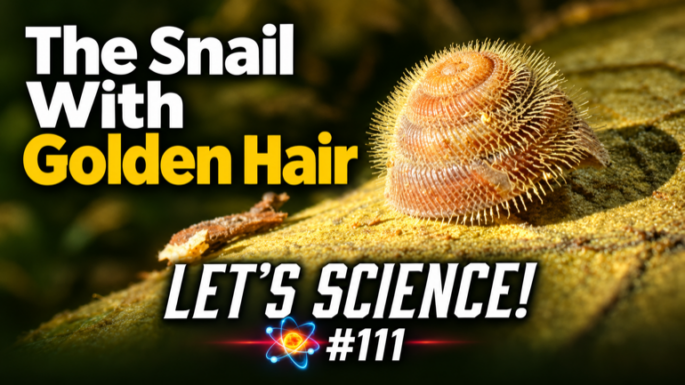
SCI111: Most snails lay eggs. The Norfolk Island hairy snail gives birth to live young, wears spiral rows of golden bristles on its shell, and is about the size of your pinky fingernail. It is also down to a single small reserve beside a road.
Caroline Knight tells Lindsay Sant and Lino Saubolle about a creature none of them had heard of. Norfolk Island, an Australian external territory in the South Pacific, has about 60 land snail species found nowhere else on Earth, and land snails as a group have more recorded extinctions than any other animal group. They rarely get the attention that whales, birds or mammals do.
The hairy snail’s shell runs from dark gold to chocolate brown, with flame-like markings that break up its outline in the leaf litter. Its bristles may help hold moisture and let dirt stick for extra camouflage. Museum specimens lost those hairs as they dried, so for a long time scientists had little idea what the living animal looked like. Australian Museum malacologist Dr Isabel Hyman describes the moment she saw the golden hairs on a live snail and knew the population was holding on.
Then the numbers started to fall. Invasive Argentine ants turned up close to the reserve in August 2025, and searches by Parks Australia rangers and museum researchers through May 2026 found fewer live snails and more empty shells.
The rescue plan came from another Norfolk Island snail. Campbell’s keeled glass snail, rediscovered in 2020, was bred at Taronga Zoo from 46 founders, and by 2026 more than 1,300 had been returned to the wild, where they are breeding. In August 2026, 30 hairy snails were flown to Sydney under strict biosecurity. About a month later they had settled into their new enclosures and were giving birth.
The conversation then comes home. Lindsay recalls a butterfly house’s case for planting flowers butterflies love, Lino describes the pigeons, mynas and cockatoos at his bird feeder, and Caroline explains how grevillea brings wattlebirds to her small garden morning and evening while native ground covers draw bees and butterflies. Lindsay connects it to Laudato Si’ and the call to be stewards of creation, and Caroline closes with her aquarium snails, which hoover up the shrimp’s dinner.
Even a few pots on a balcony can give local creatures somewhere to feed. What could you plant this season?
Get all new episodes automatically and for free:
 Apple Podcasts
 YouTube
 Spotify
 Amazon Music
 TuneIn
 RSS
Follow by Email | Listen and subscribe on YouTube.
Help us continue to offer Let’s Science. Won’t you make a pledge at SQPN.com/give today?
Links for this episode:
- Researchers race to save Norfolk Island’s rare hairy snail
- Rare snails thought to be extinct settle into new home on Norfolk Island
- If you enjoy Let’s Science, check out Caroline and Lindsay and Lino’s other show, Catholics of Oz.
- Leave us a review on Apple Podcasts!
- Email us feedback or comments to [email protected]
- Be part of the StarQuest Discord community at SQPN.com/discord
Want to Sponsor A Show?
Support StarQuest’s mission to explore the intersection of faith and pop culture by becoming a named sponsor of the show of your choice on the StarQuest network. Click to get started or find out more.